About this program
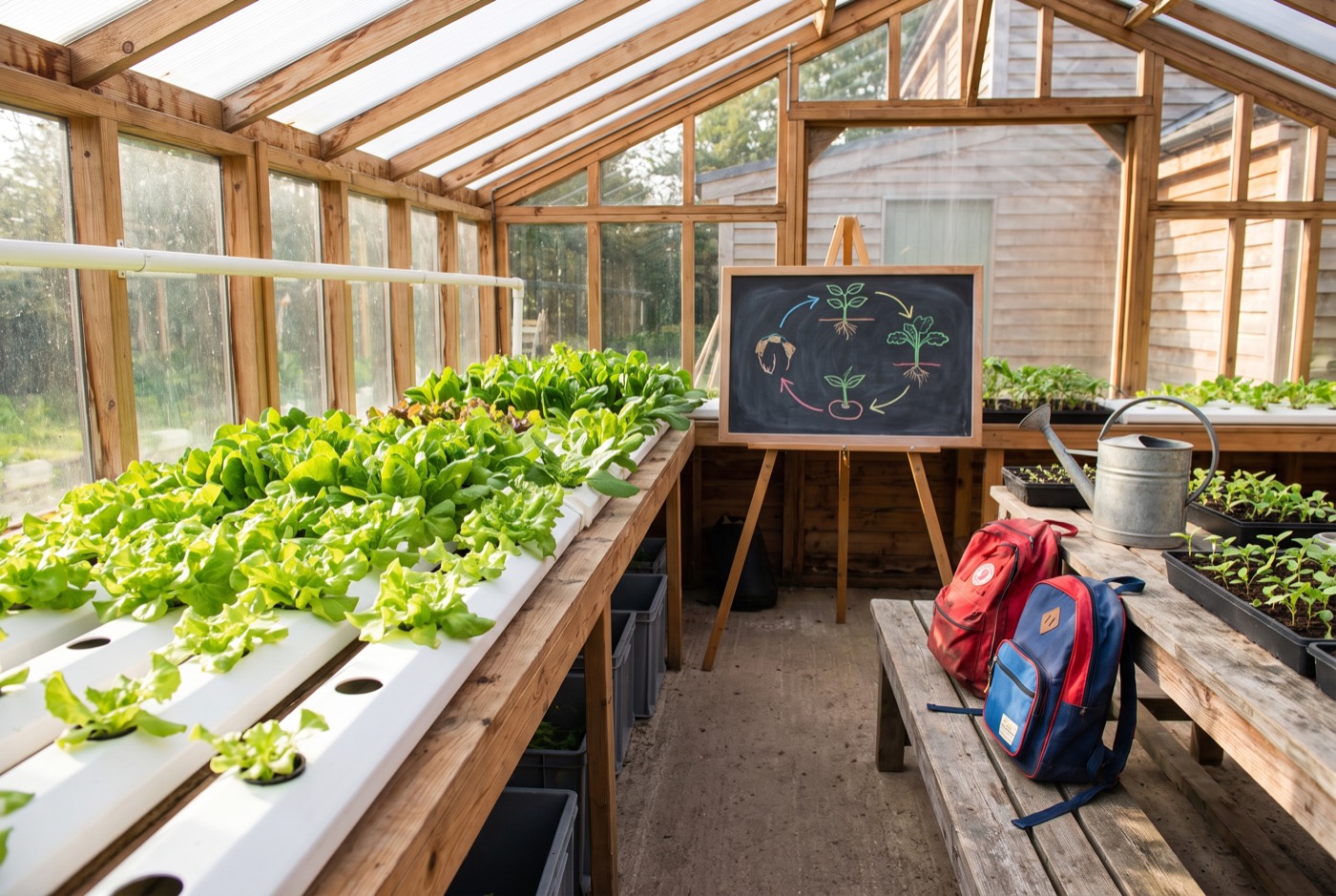
Farm to School installs a working hydroponic grow system directly inside a school — turning an unused room or corner into a functioning classroom farm. Students plant, tend, and harvest real crops as part of their coursework, connecting science lessons to something they can taste.
Produce grown in the classroom goes back into the school's own cafeteria, so the loop closes close to home: students grow food, and their peers eat it. Along the way, kids get hands-on experience with plant biology, water chemistry, and the basics of sustainable agriculture — lessons a textbook alone can't teach.
How it works
- 01
A system is installed on-site
We install a hydroponic grow system inside a school, requiring no farmland and minimal space.
- 02
Students learn the science
Teachers and our farm educators guide students through plant biology, nutrient chemistry, and sustainable growing practices as part of the curriculum.
- 03
Students grow and harvest
Students plant, monitor, and harvest crops themselves, tracking growth cycles hands-on rather than in a textbook.
- 04
Harvest feeds the cafeteria
What's grown goes back into the school's own cafeteria, so students see their work reach the lunch line.
Who it serves
Students at partner schools in Southeast Kansas, from elementary through high school, alongside the cafeteria staff and peers who eat what they grow.
Get involved with Farm to School
Volunteer, partner with us, or give — every bit keeps this program running.
Your gift keeps Farm to School running.